MICHIL'S NEWSLETTER
THE LUXURY OF RETURNING
MICHIL'S NEWSLETTER
In winter, quiet calls to us. Perhaps because days are shorter, because we gather indoors, maybe with a cup of hot chocolate in hand. The new season is underway and, as we admire the perfectly groomed slopes - and give thanks to those who care for them so meticulously - I begin to notice the sounds around me. The ski lifts. The skiers. The coffee machine sighing in the breakfast room. The ever-present ping of a mobile phone notification.
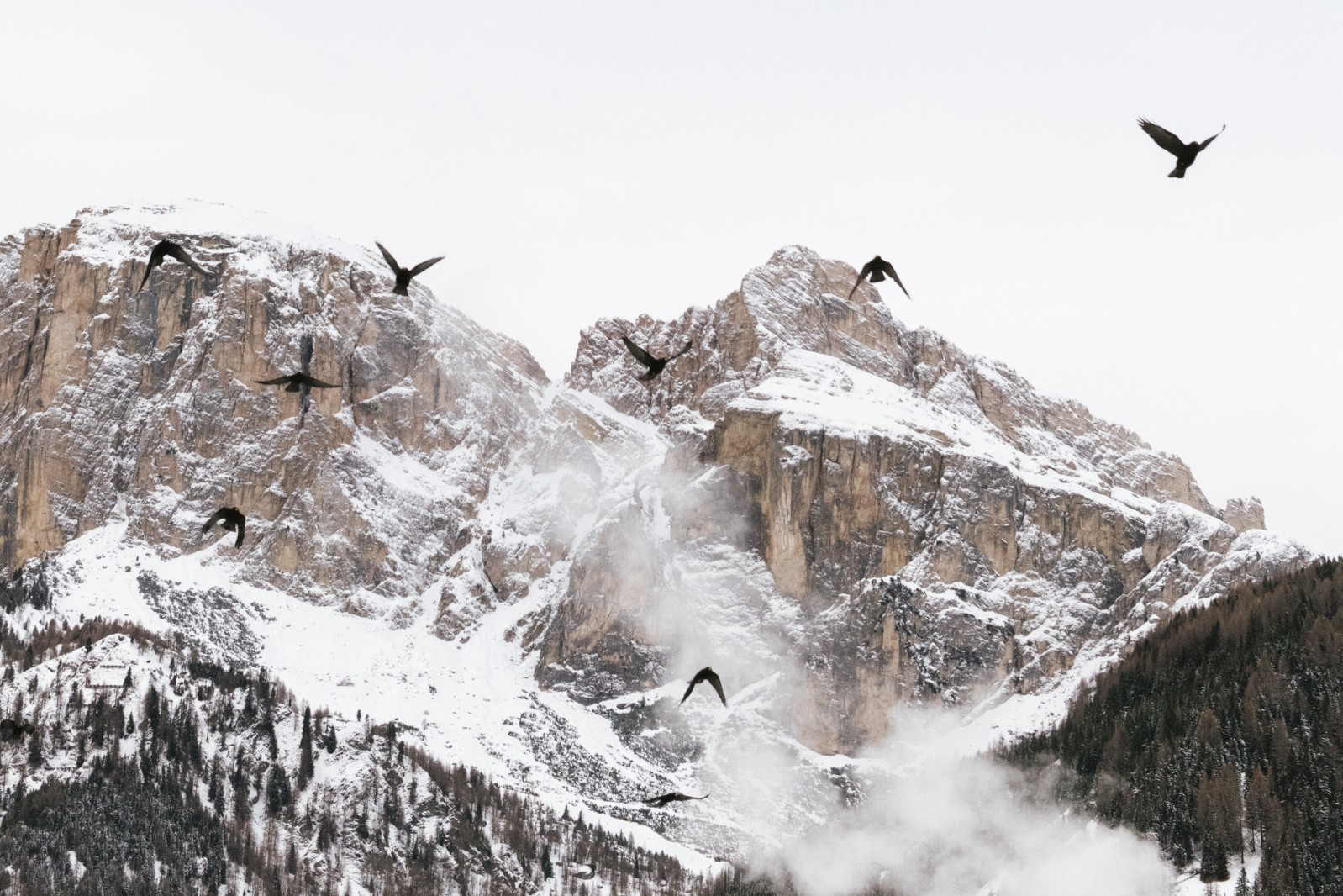
The eagle soaring high above, the beauty of the Sassongher - each time revealing a new gully, a precarious rock, a hidden crevice I had not noticed before - the ski instructors in their uniforms: all of this is part of our daily environment. It is all landscape.
But what about the soundscape?
In cities, the soundscape is a constant hum. In places we consider silent, the summit of a mountain, or a stretch of the Via Francigena near Radicofani, the soundscape is specific and alive. It changes, just like the visual landscape: with the seasons, with place, with daylight and darkness.
Those who live in cities often imagine mountain dwellers as fortunate custodians of a world free from noise and artificial light, an idealised refuge. Yet we, too, suffer from acoustic and light pollution. Snowploughs, snow cannons, helicopters flying out of necessity: this is our work, our livelihood, something we must, and can, live alongside, aware of our privilege.
And what of the excess of artificial light, even here in the Dolomites?
Could the intensity of the white lights in the small garden before the lovely church dedicated to Saint Catherine - right opposite our Hotel La Perla in Corvara - be softened? It would be beautiful. And must those glaring neon lights in our villages truly remain on all night long?
Once, on Torcello, a small island in the Venetian Lagoon with seven residents, a handful of businesses and an ancient church, I experienced silence. Venice felt near, yet far away. Then an aeroplane cut through the stillness. I wondered where it was headed.
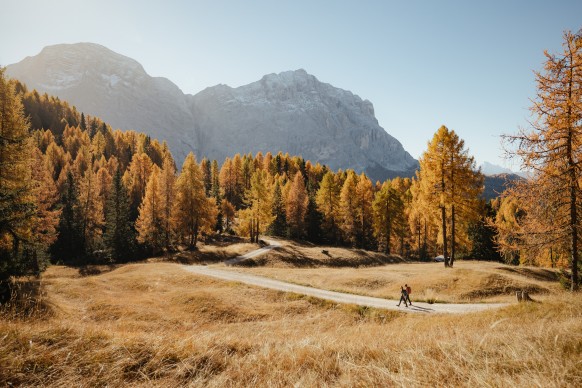
And last autumn, on Passo Furcia, stepping onto the balcony of our Bio Alpine Hotel Gran Fodà, it felt almost strange to hear nothing at all: no cars, no hikers. Just the call of an eagle, part of the soundscape. Until a bus arrived and broke the spell.
Space. Time. Silence.
A luxury that coincides with fundamental human needs we are, often consciously, sometimes forcibly, giving up.
In a letter to his wife Louie dated July 1888, John Muir wrote:
“Only by going alone in silence, without baggage, can one truly get into the heart of the wilderness. All other travel is mere dust and hotels and baggage and chatter.”
This, ultimately, is the point: not the romantic myth of a “mute” mountain, but the concrete responsibility not to drown out, with our own noise, what would already be there for us to hear.
Listening to sounds can be essential in recognising environmental change: the loss of biodiversity, the health of a territory, the benefits or harm sounds bring to the beings who inhabit it. By tuning in to the landscape, we may catch early warning signals. Sound tells us much about ecosystems, about the lives we choose to lead - even about the peace we seek.
We struggle to grasp the invisible, and hearing rarely gives us a complete picture. The whistle of an eagle. An avalanche breaking loose. A thin sheet of ice cracking on a stream. Some sounds register negative decibels, imperceptible to us, yet clearly audible to other species, each with its own threshold of silence.
Can we imagine a quieter future?
Perhaps we must rethink our impact on soundscapes - redesign tourist destinations with acoustic restraint in mind, for the wellbeing of those who visit and those who live here. And I mean all living beings.
Because silence is not promised.
It is built, through stubborn choices, courageous education, gentler lights, lower volumes, and a different idea of hospitality: one that does not always add, but sometimes removes what prevents us from truly listening.
The truest landscape, often, is not seen.
It is heard.
And to close, a warm farewell with a line by Han Kang:
“Snow is silence falling from the sky.”
.m